What Chronic Illness Taught Me About Building Human-First Businesses: The "What If" Expectations Most of Us Are Too Afraid to Set
How do I set expectations or policies that plan for life happening without losing trust?
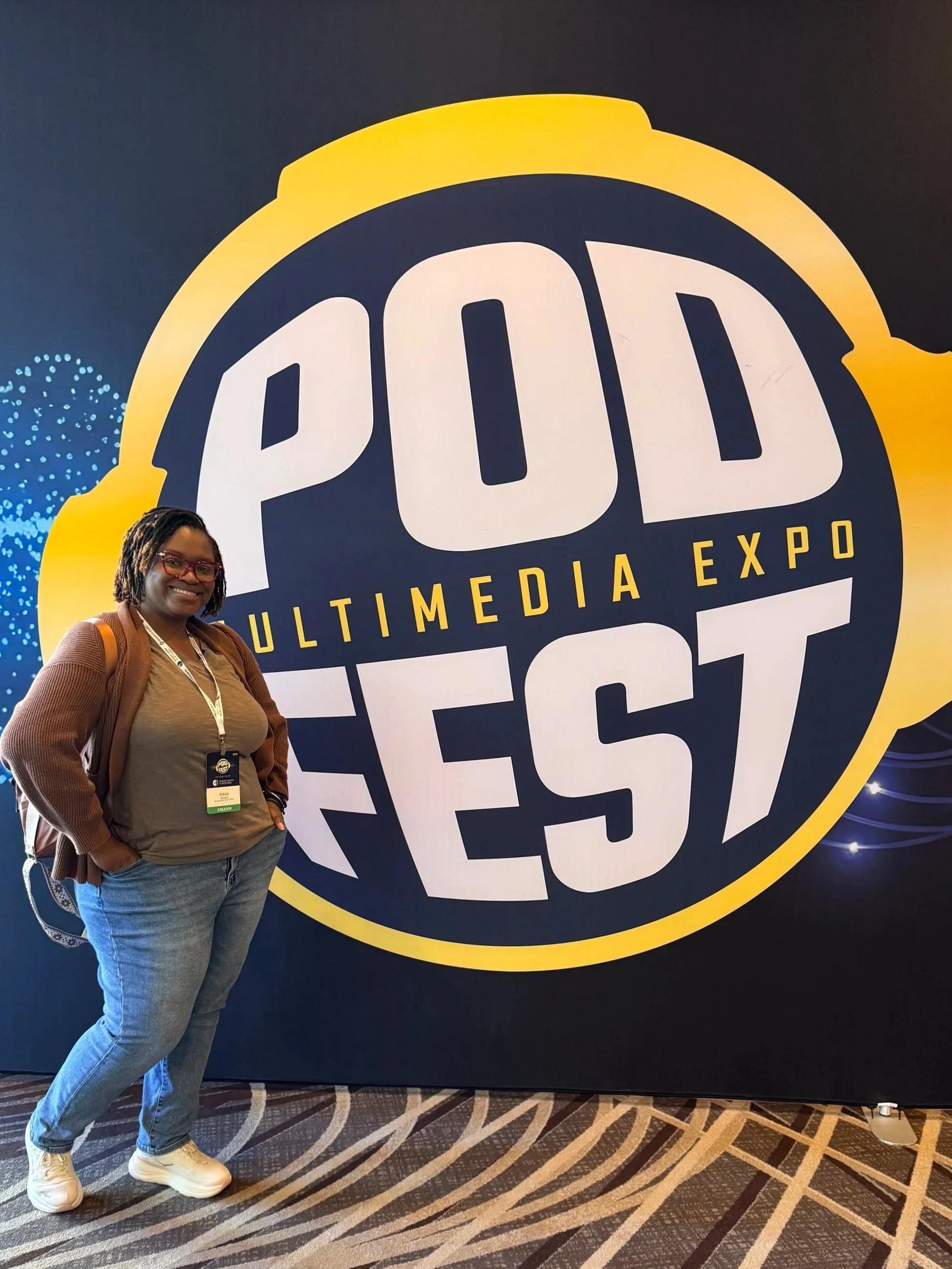
Thrive with Nikita At 2027 Podfest in Orlando, Fl
I left a conference feeling frustrated.
Not because the content was bad across the board, other than being sold to at every turn it seemed like, but I intentionally got what I came for. I met amazing people. I focused on what I wanted to learn.
But the logistics? They left me feeling like I’d been baited and switched. Taken advantage of, even.
And it wasn’t because things went wrong. Things go wrong all the time. Life happens. Speakers cancel. Logistics shift.
It was because no one set the expectation that things COULD go wrong.
If people couldn’t show up, what was the backup? If something couldn’t be located, what were the options? If the experience didn’t match what was promised, how would they make it right?
I had expectations for this conference, one that’s been around for years, and I would have expected they could have anticipated the “what if “scenarios and communicated them ahead of time.
But they didn’t.
And sitting in that frustration, I realized: This isn’t the first time I’ve felt this way.
Why I Notice This (And Why It Matters)
Living with chronic illness has made me hypersensitive to the absence of “what if” planning.
When you live in a body that doesn’t always go as predictably, which creates a certain kind of certainty, you get really good at communicating and anticipating “what ifs.” You have to.
What if you need to reschedule because of a flare? What if your body doesn’t cooperate that day? And it’s not any fault of your own? What if I’m running late because I had to pull over for safety?
I’ve navigated countless systems—salons, doctor’s appointments, service providers—that demand 24-hour cancellation notices but offer zero grace when your body doesn’t give you 24 hours’ warning.
I’ve been charged for appointments I couldn’t make it to. Been dropped as a client for being honest about what’s happening. Been made to feel like my chronic illness was an inconvenience to them…
And I vowed I would never make anyone feel that way in my business.
Because here’s what living with chronic illness has taught me and continues to do so. The absence of “what if” expectations isn’t professional. It’s a trust killer.
When something inevitably goes wrong, and there’s no plan that’s been communicated, people feel exactly how I felt in those moments:
Baited and switched. Taken advantage of. Like the investment we made was one-sided.
The Pattern We Don’t Talk About
This happens everywhere.
Doctor’s offices that require 24-hour cancellation notice—but your body doesn’t give you 24 hours’ warning.
Conferences that promise experiences but don’t plan for “what if” scenarios.
Businesses that preach “authenticity” but punish you for being authentically human.
And it’s not just about chronic illness.
It’s kids getting sick. Family emergencies. Mental health days. Grief. Car trouble. Life happens in ways we can’t predict or control.
We’ve built business systems that expect everyone to operate like machines. Predictably. Perfectly. Without variance.
And then we wonder why trust is eroding.
The Expectations We’re Too Afraid to Set (And Why)
But you’re probably thinking, “Nikita, if we tell people to expect the unexpected, we could lose money, right…”
I hear it, and I get it. But likely you are losing money anyway…
We’re afraid to set “what if” expectations because we think it makes us look “Unprofessional.” Like we’re planning to fail, and nobody wants to pay for things, that may not work out….
We don’t want to tell people, “Hey, if an emergency happens, here’s what comes into place,” because somehow we’re supposed to be perfect at all levels and never have life happen. 🙄
But that fear is killing trust.
People don’t trust perfection. They trust honesty.
You know who sets expectations about their imperfections? AI.
Literally. AI tells you: “By the way, you might want to double-check this because I’m AI and I might not be right.”
If technology, actual robots…. can come from a place of “we are imperfect and have flaws,” why can’t we?
Why can’t the humans behind our businesses do the same? And why would it be better if we did? It’s these unspoken things that create and Sustainable business.
What It Looked Like for Me to Get Okay With This
I had to get okay with this truth: If I can’t deliver for a client, I need to let them know how they’ll still get what they paid for.
Doing this, thinking about how I have felt in these types of situations was the turning point for me.
Not “I’ll never let anyone down.” Not “I’ll push through no matter what.”
But: “What happens if I can’t show up? What’s the plan?”
As I continued to learn more about releasing the pressure and guilt around living with chronic illness, realizing it wasn’t something to be ashamed about, I started being honest about the times I could or couldn’t show up for my clients.
Everybody has crap going on in their lives.
We need to just set the tone that humanity is part of our businesses. Doing so releases the pressure and a true path sustainable businesses that grow.
Here’s what that actually looks like in my business:
Response time expectations:
I tell clients they’ll hear back from me within 24-48 hours
If I’m particularly capacity-drained, I let them know it’ll be 2 business days
I actually tell them when I’m physically drained or sick. No pretending. No performing capacity, I don’t have.
Reschedule policy:
Clients can reschedule up to 1-2 hours before the appointment (preferably the night before)
I ask for the same grace I give—because life happens on both sides
The “What If I Can’t Deliver” plan:
Clients get continued access to the program
They have access to a co-coach or soon my AI coach
They can reach me via Voxer
I will share what they need asynchronously using a tool like Loom
We rescheduled the call
All my contracts include an extra month built in to make up for any calls we—myself OR the client—may need to miss because life happens.
That last one? That’s the game-changer.
Because it sets the expectation that life WILL happen. For me. For them. And we’ve already planned for it.
The peace I feel now knowing this is in place? Unmatched.
And my clients? They love it. Because they know exactly what to expect in those situations. There’s no anxiety. No guessing. No feeling like they’re “bothering” me or being “difficult.”
There’s just clarity. And trust.
Why This Matters Beyond Your Business
This isn’t just about business strategy. It’s about rebuilding trust in a world that’s experiencing what people are calling a “trust recession.”
And I think a lot of that lost trust comes from this exact issue: We haven’t included the human first.
We see famous people, entrepreneurs, and content creators, and we wonder how they do it all. How they show up perfectly. How they never seem to break.
This is why we love memoirs. We get a glimpse into the human behind the human. The reason why they said or did what they did. The struggles we didn’t see.
We’re starving for that honesty. That acknowledgment that everyone is carrying something.
And I wonder: What if we all gave ourselves and each other a little bit more space and grace?
What if we built businesses expecting life to happen? What if we walked around knowing people are carrying so much, and we built that compassion and empathy into how we market, sell, and serve?
What if setting “what if” expectations became the norm, not the exception?
Is this only a chronic illness problem?
No. This isn't just about chronic illness, it's about the fact that almost every client you have will eventually hit a moment their life doesn't cooperate with your calendar. Kids get sick. Family emergencies happen. Mental health days happen. Grief shows up uninvited. Car trouble happens.
Three in four American adults have at least one chronic condition, and over half have two or more. That's not an edge case you're planning for. That's most of your client base, whether you know it yet or not.
We've built business systems that expect everyone to operate like machines. Predictably. Perfectly. Without variance. And then we wonder why trust is eroding.
How to Start Setting the Expectations You’re Afraid to Set
If you’re reading this and thinking, “I need to do this in my business,” here’s where to start:
1. Identify your “what if” scenarios
What if you get sick?
What if a client needs to reschedule?
What if you need to step away for a family emergency?
2. Decide what the plan is for each scenario
How will clients still get what they paid for?
What’s the backup? The alternative? The extension?
3. Communicate it upfront
Put it in your contracts
Include it in your onboarding
Reference it in your sales conversations & market it as part of your values and branding
Make it a feature, not a flaw
4. Practice the language
“Here’s what happens if...”
“I’ve built in extra time/support because life happens.”
“You can reach me within 24-48 hours, or 2 business days if I’m capacity-drained.”
5. Give yourself permission to BE HUMAN
Release the shame around needing flexibility
Stop performing capacity you don’t have
Trust that honesty builds more loyalty than perfection ever will
The Long-Form Advantage
One more thing: Long-form content and marketing have been one of my biggest tools for setting expectations and creating capacity.
Trying to communicate all of this part of being human with nuance, the “what ifs,” in 15 seconds or a static post? Nearly impossible.
But in a podcast episode? An email? A long-form article like this one or a blog?
I can actually SAY what I mean. I can set the tone. I can build the trust.
Short-form content didn’t align with the reality of me being a human first.
So if you’re blaming yourself for not being more active on social media, consider this: Maybe the problem isn’t you. Maybe it’s the medium.
Maybe you need space to communicate in a way that honors the complexity of being human while running a business.
An Invitation to Build Differently
If you want my exact strategies for building a simple, sustainable business foundation that helps you create consistent sales through marketing using podcasting and other long-form strategies that keep working while you rest, serve your clients, and live your life?
Join my free Create Your Abundant Path Series.
It’s an exclusive email series where I share the practical, detailed playbook for:
Setting expectations that build trust
Creating systems that hold you when you can’t hold yourself
Using long-form content to do the heavy lifting
Building capacity for life to happen—without scrambling
Because we don’t build businesses just for profit or the “until I make it” seasons.
We build them for the moments when life demands our full presence. When our bodies don’t cooperate. When grief shows up uninvited. When chronic illness flares. When family needs us.
We build them to breathe.
And that starts with setting the expectations we’ve been too afraid to set.
The ones that say: I’m human. You’re human. Life will happen. And I’ve planned for it.
That’s not unprofessional. That’s trust.
Come join us.